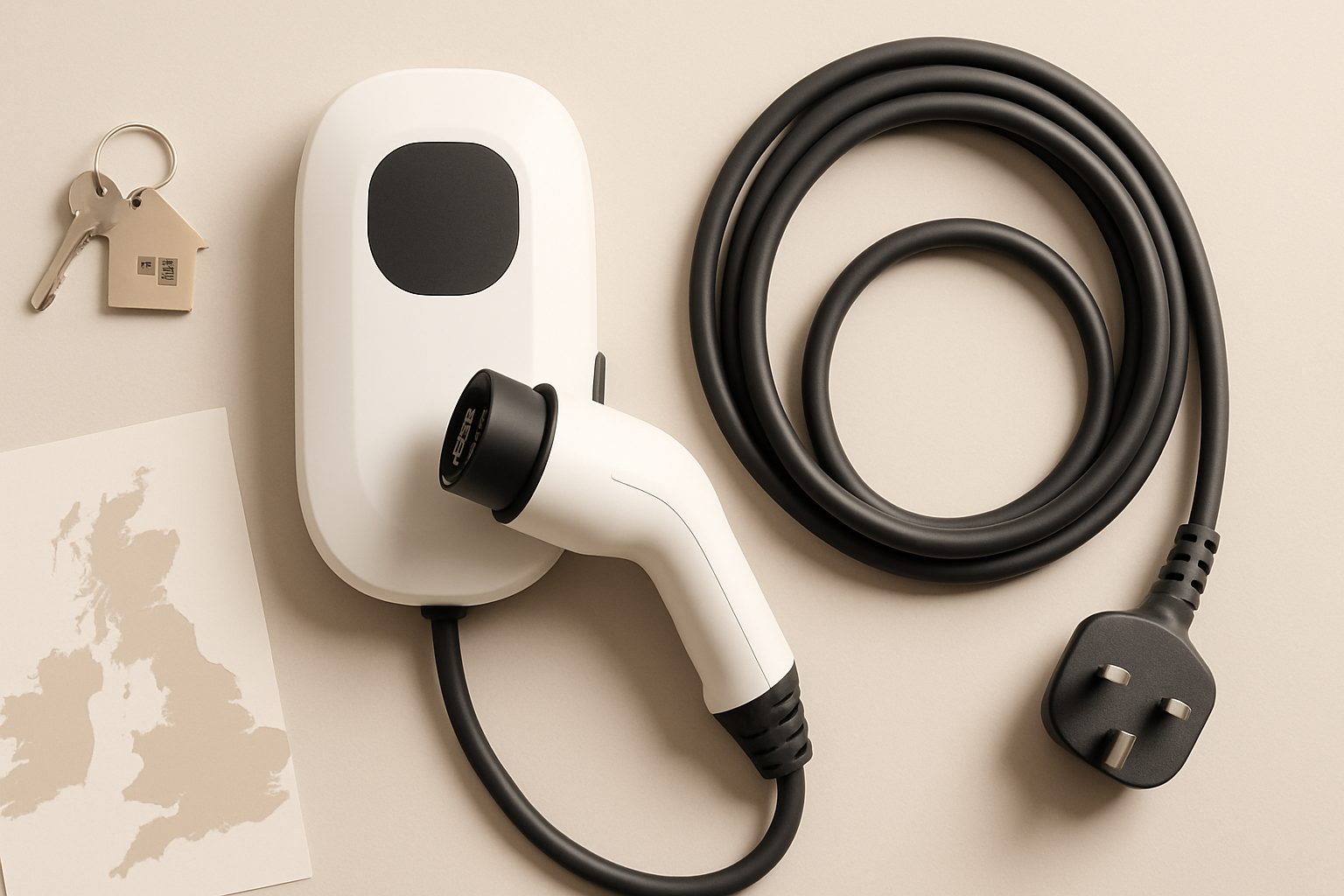
Wallbox Pulsar Plus Review UK: Compact, Smart, and Worth Buying?
The Wallbox Pulsar Plus is a smart home EV charger that's been gaining traction among UK drivers, particularly those wanting something smaller, aesthetically cleaner, and genuinely app-driven without breaking the bank. At around £400–500, it's positioned as the accessible entry point to proper smart charging. But is it actually worth the investment, or are the compromises too significant?
What is the Wallbox Pulsar Plus?
The Pulsar Plus is a 7.4 kW single-phase charger—meaning it charges slower than three-phase 11 kW or 22 kW models, but faster than a standard 3-pin plug and genuinely practical for most UK homes. Wallbox, a Spanish manufacturer with a solid reputation in Europe, designed this unit to look modern and compact, roughly the size of a thick hardback book. It's wall-mounted, doesn't require a separate consumer unit upgrade on most properties, and integrates with the myWallbox smartphone app for control and monitoring.
This matters because a lot of affordable chargers are either dumb devices (no app, no smarts) or require installation complexity that pushes total cost well past £1000. The Pulsar Plus tries to split the difference.
Real-World Charging Speeds
A 7.4 kW charger delivers approximately 30 miles of range per hour to a typical EV. On a full overnight charge (8–10 hours), you're looking at 240–300 miles depending on your vehicle's efficiency. For context:
- A Volkswagen ID.3 Standard (58 kWh battery) charges from empty to full in roughly 7–8 hours
- A Tesla Model 3 (60 kWh usable) takes about 8 hours
- A Nissan Leaf Plus (62 kWh) sits at 7–9 hours
These figures assume a proper installation with the charger wired directly to your fuse box. Anything less and you'll lose performance. For most UK drivers doing a 20–40 mile commute, overnight charging to full is more than sufficient, so single-phase limitations don't hurt daily life.
The myWallbox App: Actually Useful
Where the Pulsar Plus earns its "smart" label is the app. You get real-time monitoring of what's charging, how much energy you're drawing, and charging history. The interface is straightforward—no buried menus or confusing terminology. You can manually start and stop charging remotely, which matters if you're preheating your car and want to defer charging until after peak electricity rates.
More interestingly, you can schedule charging windows. If your tariff is cheaper between 2am and 5am, the app lets you set that as an automatic charging window. It's not revolutionary, but it removes the friction of manually timing things around Economy 7 or other time-of-use deals.
There's no fancy vehicle integration (no automatic detection of battery state), but for the price, that's fair. You're managing it yourself, which isn't a massive burden.
Eco-Smart Solar Mode: The Pitch vs. Reality
Wallbox markets an "Eco-Smart" mode that integrates with compatible solar systems and battery storage. The idea: your charger pulls excess solar power directly, minimizing grid draw and maximizing your self-generated energy.
The real situation is more nuanced. The Pulsar Plus can integrate with Fronius, SMA, or Huawei solar inverters via Wi-Fi, but only if you own one of these brands and have the right setup. If you've got a Tesla Powerwall or most other home batteries, integration is trickier—you're back to manual scheduling. For a household already running solar, it's a nice-to-have. For everyone else, it's a feature that doesn't apply, so don't pay extra expecting it to revolutionise your charging.
Comparison: Wallbox Pulsar Plus vs. Ohme Home Pro
At a similar price point (Ohme Home Pro also sits around £400–500), these two represent different philosophies.
Wallbox Pulsar Plus is hardware-focused: solid charger, slick app, smaller form factor. If you want something that looks clean and works reliably, it delivers. The app is more polished than many competitors.
Ohme Home Pro is grid-focused: it's specifically designed around smart charging integration with the national grid and your electricity supplier. Ohme's software is built around Dynamic Demand Response—automatically shifting your charging to periods when grid demand is low, which can save you real money if you're on a compatible tariff (Octopus Intelligent, for instance).
The trade-off: Ohme is smarter about when it charges if you plug in your car and forget about it. Wallbox requires you to set the schedule manually. If you want a "set and forget" experience aligned with grid signals and lower rates, Ohme edges ahead. If you want simplicity and visual appeal, Wallbox wins.
Practical Strengths
- Compact design that doesn't dominate your wall
- Reliable build quality; Wallbox has years of European market experience
- Simple app that actually works without frustration
- 7-year warranty (industry-standard but reassuring)
- No subscription fees once installed
Realistic Weaknesses
- 7.4 kW means slower charging than 11 kW chargers; if you've got three-phase supply and want to maximise speed, look elsewhere
- Solar integration only works with certain inverter brands
- No built-in battery integration; you can't intelligently use home storage
- Manual scheduling required; no automatic grid response like Ohme
- Requires a professional installation (£200–400 additional cost)
Verdict
The Wallbox Pulsar Plus is worth buying if you want a reliable, good-looking charger with a solid app and aren't bothered about advanced grid integration features. It's genuinely practical for the majority of UK drivers. However, if you're on a smart tariff (Octopus Intelligent, OVO Flex), the Ohme Home Pro's automatic grid optimisation will likely save you more money over time than the Pulsar Plus's static scheduling can match.
For straightforward home charging on a budget, the Pulsar Plus delivers. For maximising savings through smart grid alignment, you need Ohme.
More options
- Ohme Home Pro EV Charger (Amazon UK)
- Zappi V2 EV Charger (myenergi) (Amazon UK)
- Wallbox Pulsar Plus EV Charger (Amazon UK)
- Andersen A2 EV Charger (Amazon UK)
- Portable Mode 2 EVSE Granny Cable (Amazon UK)