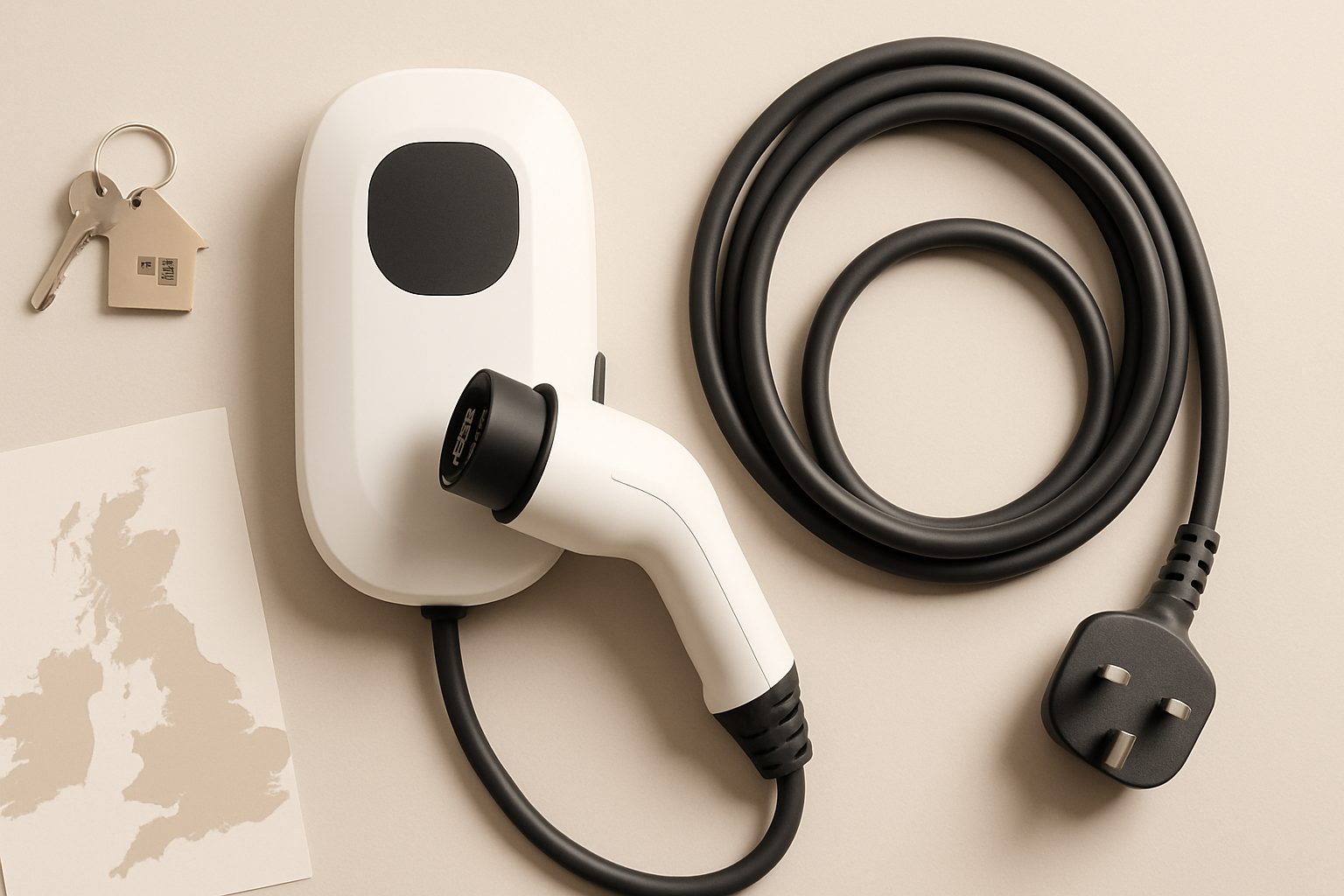
Tethered vs Untethered Home EV Charger UK: Which Should You Buy?
When you're shopping for a home EV charger, one of the first decisions you'll face is whether to go tethered or untethered. It sounds like a minor spec, but it affects convenience, running costs, vulnerability to damage, and how well the charger fits your household's actual needs. Both types are common in UK homes, and the right choice depends on your situation.
What's the Difference?
A tethered charger has the charging cable permanently attached to the unit. It's fixed in place, coiled up, and ready to use immediately. An untethered charger has no cable attached—you buy the charger unit and the cable separately, then connect them when you need to charge.
In the UK, most untethered chargers use a Type 2 connector (the EU standard). The cable is usually stored nearby on a reel, wall bracket, or in a cabinet, and you plug it in when charging.
Tethered: Convenience vs. Exposure
Pros:
- Ready to charge instantly. No fumbling with cables or connectors.
- The fixed cable is harder to steal than a removable one sitting on a bracket—though determined thieves can cut tethered cables at the connector.
- Simpler installation and fewer moving parts to manage.
- Often slightly cheaper upfront since the cable is included.
Cons:
- The cable is always exposed to the elements: rain, UV, temperature swings, and road salt in coastal areas. This accelerates wear over time.
- If the cable is damaged or develops a fault, you can't just replace the cable—you typically need to replace or repair the entire charger unit, which is expensive.
- Less flexibility if you own multiple cars. You're locked into one cable configuration.
- The fixed cable can limit your positioning. If your car is parked at an awkward angle, a short tethered cable might not reach comfortably.
Untethered: Flexibility and Control
Pros:
- The cable can be stored indoors or under cover when not in use, reducing weather exposure and extending its lifespan.
- If the cable is damaged, you replace just the cable (typically £150–£400), not the entire charger (£300–£800+).
- Ideal for multi-car households. You can own one charger and multiple cables, or buy different cable types for different vehicles if needed.
- You can upgrade your cable independently as better or longer cables become available—useful as your charging habits evolve.
- More future-proof if EV standards or connector types shift (though unlikely in the UK for the next decade).
Cons:
- Requires cable management. A loose cable on your driveway is a trip hazard and vulnerable to weather and theft.
- More expensive upfront, since you're buying charger and cable separately.
- Slightly more steps to charge: you have to position and connect the cable each time.
- If your cable is stolen or damaged, you can't charge until you've bought a replacement.
- The connector itself can be damaged or cut even on an untethered cable, so you're not immune to cable theft entirely.
Theft and Security
This is a real concern in some parts of the UK. Cable theft is less common than it was five years ago, but it still happens, particularly in urban areas and where chargers are exposed to the street.
Tethered: The cable is harder to disconnect and remove unnoticed, but the connector can still be vandalised or cut. A thief wanting the cable itself has to work harder, which is a deterrent.
Untethered: A cable left on a reel or bracket is easier to remove in seconds. However, if you store the cable indoors (which is sensible), there's no cable to steal from your driveway.
Most installation guides recommend a locked cabinet or indoor storage for untethered cables in higher-theft areas.
Multi-Car and Future-Proofing
If you own two or more cars, untethered chargers are usually more practical. You can charge different vehicles without worrying about cable length or compatibility. One charger, one fixed installation cost, but more flexibility in how and when you use it.
Tethered chargers assume a single-car household with consistent parking. Adding a second car means either running a second charger or adapting to a single cable length, which may not work if cars are parked differently.
For future-proofing: the Type 2 connector standard is entrenched in Europe and the UK, so there's little risk of obsolescence. Both types will remain relevant for the lifespan of your home charger (10+ years).
Practical Considerations
Driveway space: Untethered chargers need nearby storage for the cable. If your driveway is cramped, a tethered unit is neater.
Climate: The UK's wet climate accelerates cable deterioration. If your untethered cable is properly stored indoors, it'll last longer than a tethered cable exposed year-round.
Parking consistency: If you always park in the same spot and distance from the charger, tethered works fine. If parking varies or you share the charger with guests, untethered is more forgiving.
Which Should You Choose?
Go tethered if: You have one car, consistent parking, limited storage space for a cable, and you prioritise upfront simplicity and cost. Accept that cable wear and future replacement costs are higher.
Go untethered if: You own multiple cars, want to protect against cable wear, value the option to replace just the cable if it fails, or live in an area where cable theft is a concern (you can store it indoors).
In reality, many UK installers offer both, and the price difference is often smaller than you'd expect. Consider your household's actual needs, not just the headline spec. A tethered charger is genuinely convenient; an untethered charger is genuinely flexible. The best choice is the one that matches your driveway, your cars, and your willingness to manage a separate cable.
More options
- Ohme Home Pro EV Charger (Amazon UK)
- Zappi V2 EV Charger (myenergi) (Amazon UK)
- Wallbox Pulsar Plus EV Charger (Amazon UK)
- Andersen A2 EV Charger (Amazon UK)
- Portable Mode 2 EVSE Granny Cable (Amazon UK)